How to Lease Your Land for Hunting: Landowner Guide
Learn how property owners can lease land for hunting with privacy-safe listings, clear rules, request screening, pricing context, photos, and owner-approved access.
Updated June 29, 2026
Key takeaways
Property owners should start with a controlled listing that explains the opportunity without publishing exact access details.
A useful hunting lease listing needs broad location, habitat, species, dates, price context, rules, photos, and a clear request step.
Owner approval should happen before private maps, gates, routes, documents, signatures, payment, or active access are shared.
The best owner workflow turns casual interest into screened requests and agreement-ready terms instead of unmanaged permission.
Quality checks
Search intent
Use lease your land for hunting as a decision page, not a keyword page. The article should answer what the owner needs to publish, what should stay private, and which request detail changes the next step.
Quality bar
The strongest article should move from broad advice into a practical owner decision about access type, privacy, request flow, and next action.
Internal path
Connect this guide with How to Lease Hunting Land: A Landowner Guide and Landowner Hunting Lease Checklist Before You Publish so readers can keep moving through the owner workflow instead of landing on an isolated SEO page.
Decide what kind of hunting access you want to offer
Before a landowner lists private land for hunting, the first decision is not price. It is the type of access the owner actually wants to allow. A small weekend deer opportunity, a seasonal turkey lease, an annual multi-species lease, and a one-day waterfowl setup all create different expectations.
That access type affects how many hunters can be on the land, how often they may visit, whether guests are allowed, which parts of the property are open, and how much owner involvement is needed during the season.
A clear listing should tell hunters whether the property is available for day access, weekend access, seasonal access, annual access, exclusive use, shared zones, or custom owner approval. Vague access attracts vague messages.
When the access model is clear from the start, property owners can screen faster and avoid conversations with hunters who want a completely different arrangement.
Describe the land without exposing private access
Hunters need enough public information to decide whether the land is worth a request. They usually want broad location, approximate acreage, habitat, target species, access style, and whether the owner appears organized.
Public information should stop before it becomes an invitation to visit without approval. Exact addresses, gate combinations, private road names, home locations, equipment yards, stand locations, and sensitive boundary details should stay out of the open listing.
A strong owner listing can say that the land is near a town, in a certain state or region, with timber, fields, creek bottoms, pasture, ridges, water, crop edges, or brush. It can also explain that exact maps and arrival instructions are shared only after owner approval.
This balance is important for SEO and trust. The page gives search engines and hunters useful context while still protecting the property from unapproved traffic.
Use photos that prove the opportunity
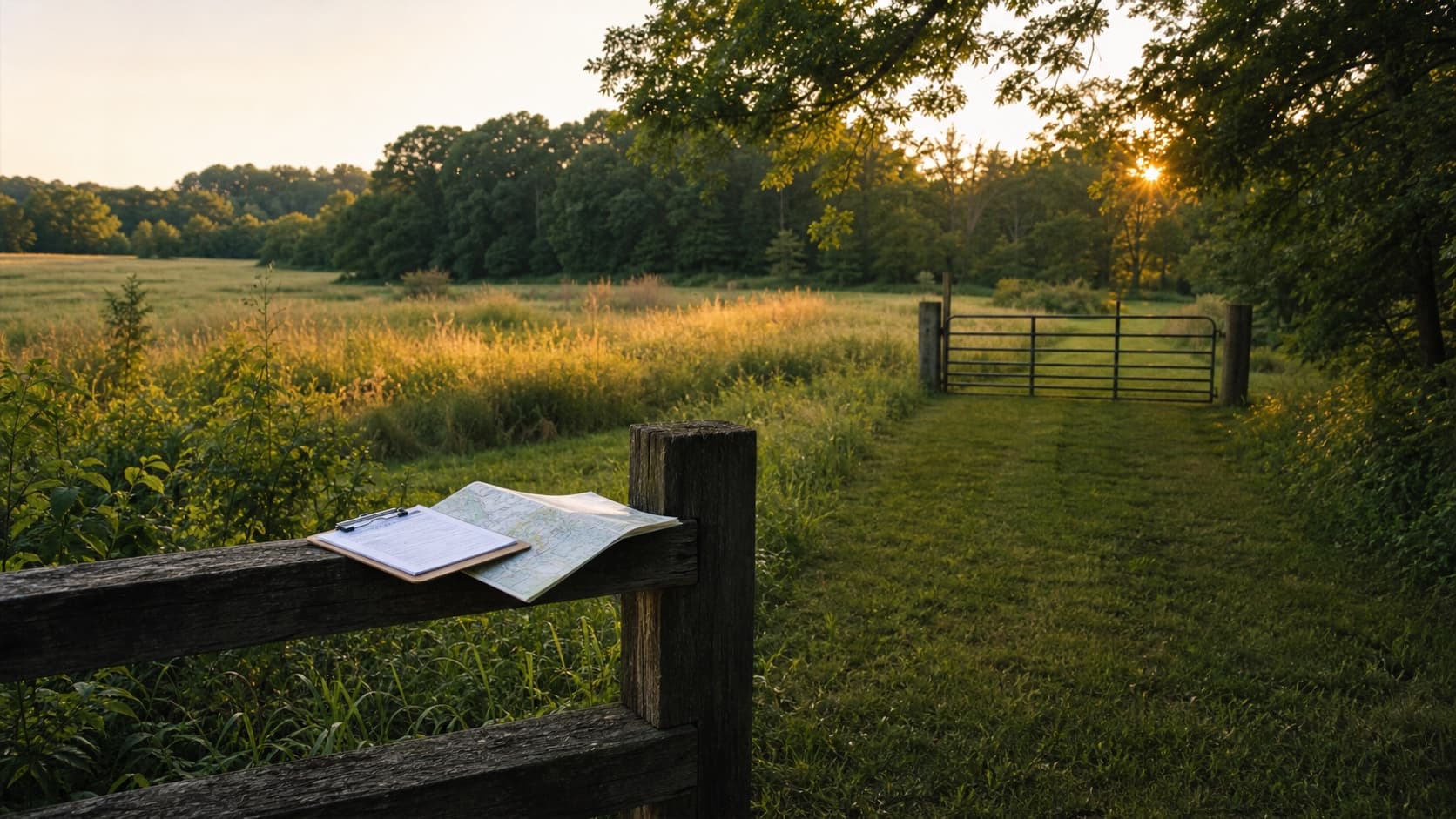
Photos help a landowner listing feel real. Good images show habitat, field edges, woods, water, access roads, trails, pasture, blinds if approved, and the general character of the property.
The goal is not to reveal every detail. Owners should avoid photos that show gate codes, house fronts, license plates, private road signs, equipment storage, exact stand trees, or landmarks that make the property too easy to identify.
A few honest, privacy-safe photos can reduce low-quality questions because hunters can see the type of land before they send a request. They also make the owner look prepared instead of casual.
For SEO, images should support the article or listing topic with descriptive alt text, realistic filenames, and visual proof of private land access rather than generic outdoor decoration.
Set rules before hunters ask for access
The most successful owner listings answer the big rule questions early. Hunters should be able to see guest limits, vehicle rules, parking expectations, stand and camera policy, dog rules, check-in expectations, alcohol policy, recovery rules, and whether any zones are closed.
Rules do more than protect the land. They filter requests. A hunter who ignores a no-guest policy in the first message is easier to decline before private details are shared.
Owners do not need to publish every final contract clause in the listing. The public page should explain the rules that determine fit, while final documents and exact map notes can come later in the approval workflow.
When rules are visible, serious hunters can self-select. That saves the owner time and makes the listing feel professional.
Price with a clear unit and realistic expectations
A hunting lease price is easier to understand when the billing unit is clear. The listing should explain whether pricing is per day, weekend, season, year, hunter, party, blind, field, zone, or custom owner quote.
Owners should think about species, season timing, exclusivity, party size, habitat, access quality, amenities, pressure, and owner workload before choosing the structure. A full-season exclusive lease is very different from one approved weekend.
If the owner wants to quote after reviewing dates and party size, the listing can say that. Clear price context is better than leaving hunters to guess and send broad messages.
Pricing should also match the final terms. If a hunter requests additional guests, different species, scouting days, camping, or a longer access window, those changes should be handled before approval.
Move from public listing to owner-approved access
A public listing is only the first step. The owner should still review the request, confirm the hunter's plan, ask follow-up questions, verify required details, and decide whether the person or party fits the property.
Private maps, gates, routes, emergency contacts, documents, signatures, payment, and arrival instructions should come after the owner has enough confidence to move forward.
This is where a dedicated hunting lease workflow helps. It keeps discovery public, keeps sensitive property details gated, and turns approved requests into clear terms instead of loose text messages.
For property owners, the real value is control. A good listing brings qualified hunters to the door, but the owner decides who gets access, when they get it, and under what rules.
Keep building the workflow
Read this guide with the next practical step.
FAQ
How do I lease my land for hunting?
Start by defining the access type, broad location, habitat, species, dates, rules, price structure, photos, and request process. Keep exact maps, gates, routes, and final access private until you approve the hunter.
Should I publish my exact property address in a hunting lease listing?
Usually no. Broad location and habitat context are useful publicly, while exact addresses, gates, private roads, and detailed maps should wait until owner approval.
What information should hunters send before approval?
Useful request details include desired dates, target species, hunting method, party size, guest plans, vehicle needs, rule confirmation, and any owner-specific questions.
Can small properties be listed for hunting access?
Yes. Small properties can work when the listing is honest about species, access windows, pressure limits, safety buffers, boundaries, and realistic owner rules.
Why use Huntfields instead of casual messages?
Huntfields helps owners publish privacy-safe listings, screen requests, protect exact access details, and move serious hunters toward clearer lease terms.